
China's Distributed Energy Storage at a Critical Juncture: Transitioning from Rapid Expansion to Addressing Deep-Seated Challenges
A recent report by the Zhongguancun Energy Storage Industry Technology Alliance and the Natural Resources Defense Council, titled "Research on Business Models for Distributed Energy Storage Development," reveals a period of explosive growth for distributed energy storage (DES) in China. The country's cumulative installed capacity for DES surged from 570 MW in 2019 to over 3,638 MW by Q3 2025, representing a more than fivefold increase.
The sector has crystallized around six primary application scenarios: storage paired with commercial & industrial (C&I) users, distributed photovoltaic (PV) systems, direct green power connections, transformer district storage, virtual power plants (VPPs), and charging/swap stations. Among these, the C&I segment is the most mature, primarily generating revenue through peak-valley electricity price arbitrage. Provinces like Jiangsu, Guangdong, and Zhejiang, with significant peak-to-off-peak price differentials, lead in installed capacity.
Despite this rapid scaling, the industry stands at a critical juncture where it must transition from policy-driven growth to sustainable, market-based commercialization. Key challenges include over-reliance on a single profit model, policy dependency, and an incomplete safety standard system. Systemic breakthroughs in market mechanisms, technological innovation, and safety regulations are urgently needed.
Dual Drivers: Policy and Market Reforms
DES refers to smaller-scale storage systems deployed near end-users or distribution grid nodes. While individual projects are smaller and more complex to develop than centralized storage, making overall growth rates slower, the field is attracting increased attention as competition in centralized storage intensifies and squeezes profit margins.
According to Huang Hui, a Senior Advisor for Clean Power at NRDC, DES development benefits from a "twin-engine" drive of policy guidance and market mechanisms. On one hand, emerging applications like direct green power connections, zero-carbon parks, and data centers create rigid demand for local renewable energy consumption, positioning DES as a key technical solution. Zero-carbon parks, for instance, require a minimum of 50% direct green power supply paired with high reliability, creating a "green and stable" power need that directly fuels DES adoption.
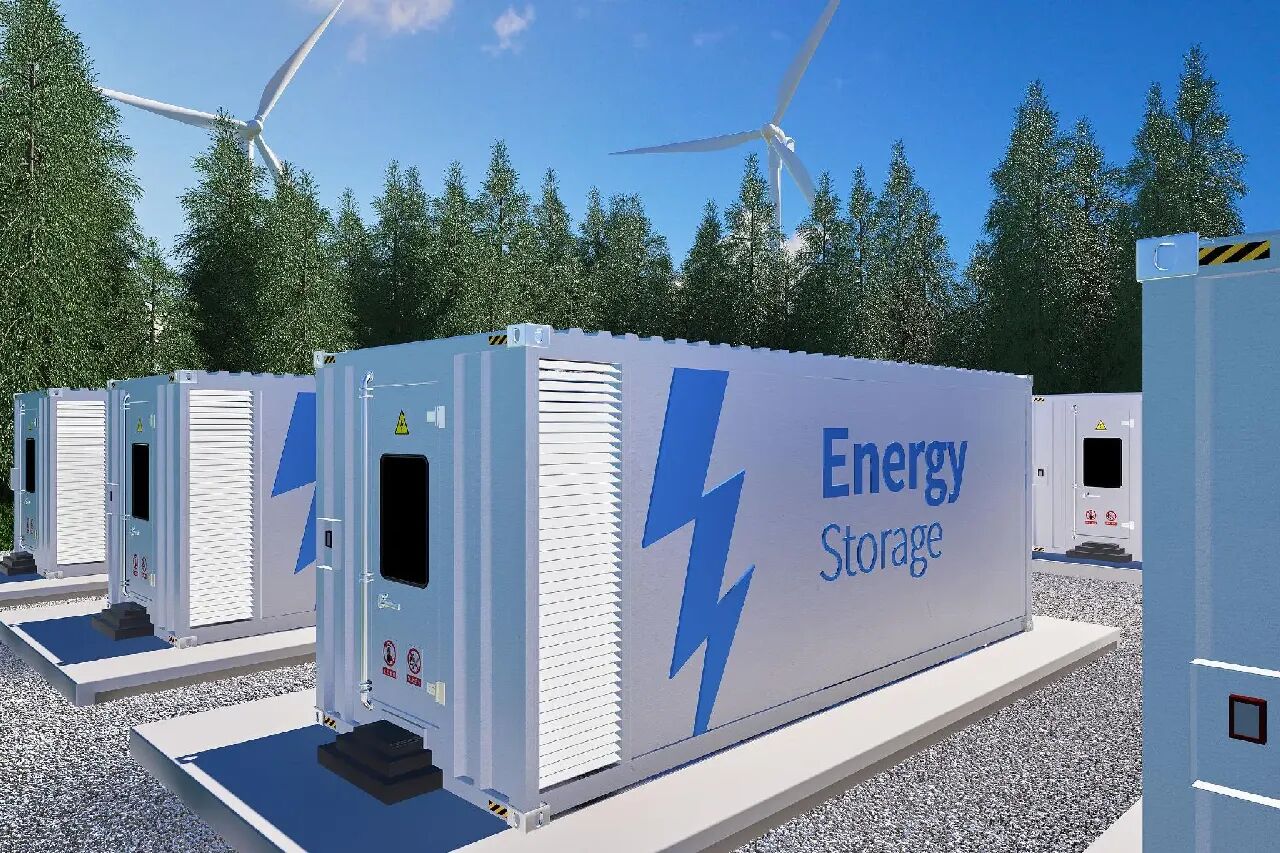
On the other hand, power market reforms are opening new revenue streams. By aggregating through VPPs, DES can participate in diverse market transactions such as spot energy markets, frequency regulation, and ancillary services, expanding profitability and enhancing project economics.
Huang Hui notes that compared to grid-side independent storage, DES offers unique advantages in addressing localized issues like distribution network congestion. Through VPP platforms, multiple distributed storage units and adjustable loads can operate in coordination to precisely manage and relieve local grid bottlenecks. Experts agree that by storing surplus power locally and smoothing fluctuations, DES significantly boosts the self-consumption rate of local renewables and the hosting capacity of distribution grids. With maturing technology and improving standards, DES is poised for wider adoption during the "15th Five-Year Plan" period (2026-2030).
Challenges: Monolithic Profits and Safety Concerns
Despite its promise, DES commercialization faces stark hurdles. The dominant C&I storage model remains heavily reliant on peak-valley arbitrage for economics. Peng Kuankuan, Deputy General Manager of Domestic Marketing at Pylontech, acknowledged that while models like VPPs and demand response are being explored, price arbitrage remains the only relatively stable and predictable income source. This policy dependence leaves the sector vulnerable to regulatory changes. For example, a proposed adjustment to time-of-use tariffs in Zhejiang Province in October 2025 is estimated to extend the payback period for a typical 2-hour lithium battery storage project from 5.4 to 9.1 years, severely impacting project viability.
Beyond profitability, scaling C&I storage faces three structural pain points:
High Development Costs: Project development involves complex assessments of host conditions, site suitability, load profiles, partnership models, and grid connection capacity, creating high barriers to rapid deployment.
Prominent Safety Risks: With systems located close to user operations in complex environments, the lack of uniform provincial standards for equipment selection and siting has led to potential safety hazards in some early projects. Cross-departmental permitting for land use, fire safety, and municipal regulations also remains cumbersome.
Low-Price Competition Compromising Quality: Intense competition has driven system prices down from approximately 1.5 RMB/Wh to 0.6-0.8 RMB/Wh. Some manufacturers, cutting corners to control costs, have compromised system reliability, leading to unplanned outages. Instances of integrators exiting the market and leaving systems inoperable further undermine long-term industry health.
The Path Forward: Unlocking Multifaceted Value
The key to overcoming these challenges lies in fundamentally transforming DES from a "policy-driven arbitrage tool" into a "flexible resource with multiple values in the electricity market."
Peng Kuankuan believes the breakthrough in DES business models hinges on policy support and technological advancement. "The market mechanism framework will gradually become clearer in the next three years, though not yet fully mature. Over a longer horizon, with continued cost declines and market optimization, the prospects for DES will brighten significantly."
Zhang Mingjun, Project Manager at Shanxi Fengxing Cekong Co., Ltd., foresees important developments in technology, markets, and business models. Technologically, "AI+" integration will enable more precise load and price forecasting, optimizing charge/discharge strategies for better economics. In terms of markets, revenue channels will diversify beyond VPP participation in wholesale energy markets to include ancillary services like deep peak-shaving and reserves. Capacity market mechanisms are also being piloted; for instance, Shanxi is exploring aggregating DES capacity via VPPs to participate in capacity markets, providing long-term system support and earning corresponding compensation.
On the business model front, the old reliance solely on peak-valley arbitrage calculations will become obsolete. DES will evolve into a genuine energy value carrier. Its true long-term value lies not just in user-side savings but in providing flexibility and reliability support to the broader grid system.
The report proposes a phased approach: Short-term (2025-2027) measures should focus on ensuring basic returns and safe operation by widening peak-valley price differentials, improving demand response mechanisms, perfecting safety standards, and providing fiscal/tax subsidies. Medium- to long-term (2028-2030) efforts should deepen power market reform by establishing dynamic pricing mechanisms, exploring capacity value, enabling DES participation in ancillary services and spot markets, and tapping into its environmental value within green power, green certificate, and carbon markets. The ultimate goal is to construct diversified revenue streams, comprehensively enhancing the economic viability and market competitiveness of distributed energy storage.
Source:https://mp.weixin.qq.com/s/fWIyoKndLdm3xf0hh1PFDw