
Exemplary Cases of “Zero-Waste City” Development in Ordos | From “Rugged Ravines” to “Vast Forests”—Zhuneng Company's Ecological Civilization Initiatives Create a “Miracle in the Coal Sea”
From “Rugged Ravines” to “Vast Forests”—Zhuneng Company’s Ecological Civilization Initiatives Forge a “Miracle in the Coal Region”
Source reduction, resource recovery, and harmless disposal of solid waste are the core of “Waste-Free City” construction, and they are also key to resolving the conflict between development and the environment and promoting green industrial transformation in resource-based regions. The two large-scale open-pit coal mines—Heidaigou and Harwusu—operated by Zhuneng Company, a subsidiary of the State Energy Group, are located in the ecologically fragile Ordos Loess Plateau region, with an annual coal production capacity of 69 million tons. While shouldering the heavy responsibility of ensuring national energy security, the company also faces immense pressure from the region’s fragile ecological environment and the disposal of massive amounts of solid waste. In the face of these challenges, Zhuneng Company resolutely implements Xi Jinping’s Thought on Ecological Civilization, consistently integrates the concept of green development, and actively explores effective pathways for the “reduction, resource utilization, and harmless disposal” of solid waste at the source in large mining areas. This has forged a “miracle of the coal sea” where energy development and ecological protection advance in tandem. Its ecological governance practices have provided an invaluable “Zhuneng Model” for resource-based regions seeking to synergistically advance “Waste-Free City” construction and high-quality development.
I. Revitalizing Solid Waste Resources to Lay a Solid Foundation for Waste-Free Development
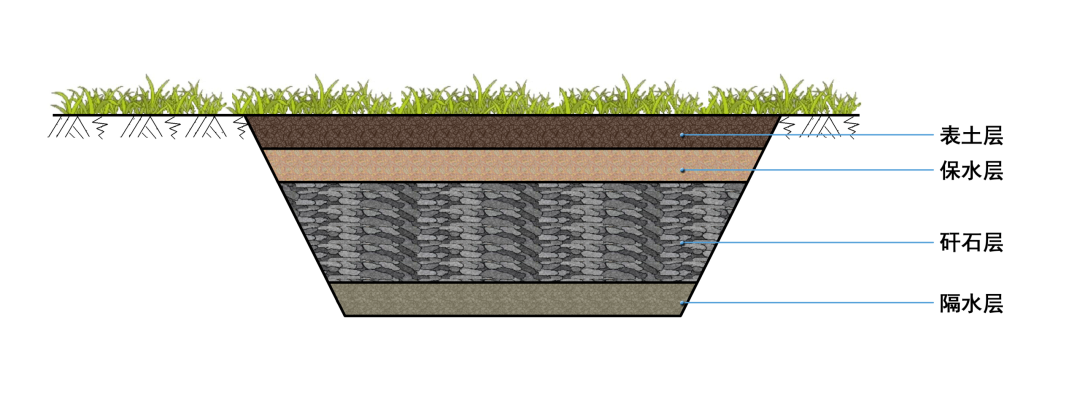
As a major national coal-producing region, Ordos generates approximately 100 million tons of coal gangue annually. Early practices involved centralized stockpiling, with a single 10-million-ton stockpile occupying thousands of acres of land. This approach not only consumed vast amounts of land resources but also posed significant challenges for long-term maintenance, increasing the risk of spontaneous combustion, geological disasters, and environmental pollution—a major obstacle that has long hindered high-quality development in coal-producing regions. Through scientific research and practical exploration, Zhuneng Company constructed a layered system from the bottom up—comprising a water-blocking layer, a gangue layer, a water-retaining layer, and a topsoil layer—to carry out ecological restoration and systematic management. The company has cumulatively processed 130 million tons of coal gangue, resolving the issues of land occupation, spontaneous combustion, and environmental pollution caused by traditional dumping methods. This has achieved the reduction and harmless disposal of solid waste, effectively laying a solid foundation for the ecological reconstruction of the mining area.
II. Implementing Integrated Mining and Restoration to Tackle Ecological Protection Challenges
To address the severe soil erosion on the Loess Plateau, Zhuneng Company has integrated three major technical systems: soil and water erosion control, ecological reconstruction, and standardized reclamation and greening procedures. This has led to the innovative development of an ecological construction technical system for the Loess Plateau. Guided by the principles of facilitating land reclamation and planting while preventing soil erosion, the company has rationally organized an “integrated process” for waste disposal, establishing a scientific workflow of “topsoil stockpiling—rock stripping and disposal—lower loess layer coverage —topsoil coverage—land leveling—ecological reclamation” scientific workflow. This establishes a dual-protection system combining “macroscopic sediment interception and microscopic water erosion control.” Through diverse ecological structures—such as mixed grass-shrub planting and tree-grass combinations—along with soil improvement measures, the company achieves integrated management of mining and reclamation. This ensures that the geological structure and landscape of the spoil piles harmonize with the surrounding unmined areas, successfully transforming the once-rugged, gully-ridden “chicken claw” mountains into tens of thousands of acres of fertile farmland, forests, and grasslands. The fragile ecological environment has been effectively protected, resolving the major technical challenge of simultaneously advancing the development of large-scale coal bases and ecological conservation in the Loess Plateau region.
Topographic Comparison of the Reclamation Area Before and After Mining
III. Deepening Energy Conservation and Carbon Reduction to Build a Green Circular System
With “green” as the core, we continuously extend, supplement, and strengthen the industrial chain. By vigorously promoting coal, electricity, oil, and water conservation, a series of new technologies—including the conversion of electric mining trucks to hybrid power, hydrogen-based clean energy emission reduction systems, and intelligent high-efficiency energy-saving devices—have been successively applied across all production stages. This continuously fosters new momentum for transformative development, focuses on building a green, low-carbon circular economic system, effectively reduces the resource and environmental costs of development, and continuously enhances the potential and momentum of green development. The Zuneng Mining Area has established 57,000 mu of forest and 33,000 mu of grassland, absorbing 315,000 tons of carbon dioxide annually. This has generated approximately 20 million yuan in annual CCER reserves and achieved a carbon emission quota surplus of 1,175,600 tons, synergistically advancing carbon reduction, pollution control, ecological expansion, and economic growth.
IV. Strengthening Multi-Stakeholder Accountability to Enhance Ecological Restoration Effectiveness
Zhuneng Company resolutely shoulders its political responsibility for ecological and environmental protection, establishing a robust accountability system for ecological restoration. By incorporating ecological and environmental indicators into the company’s core performance evaluation system, it has formed a three-tier accountability chain characterized by “group-level coordination, department-led implementation, and grassroots execution,” ensuring that all ecological and environmental measures are effectively implemented. At the same time, the company has deepened collaboration between enterprises and local governments, building a multi-stakeholder governance framework characterized by enterprise leadership, government guidance, and social participation. By sharing governance resources, jointly promoting technological innovation, and fostering industrial integration, a synergistic effort has been formed to continuously enhance the overall effectiveness of ecological governance. Since 1990, a cumulative total of 100,100 mu of land has been reclaimed and greened, with 76.387 million trees and shrubs planted. Vegetation coverage has surged from an initial 25% to over 85%, and the average erosion modulus has decreased by 88%. The mining area’s ecosystem has achieved positive succession and a virtuous cycle, while the regional microclimate continues to improve.
V. Deepening “Ecology+” Integration to Create a Model for the “Two Mountains” Initiative
Building on the ecological resources of the mining area, Zhuneng Company has, based on its “re-greening” efforts, rationally planned the scale and structure of its ecological industries. It has established eight ecological functional zones—including the Diecui Forest Area, Zidong Agricultural Area, and Yuxiu Scenic Area—to high standards. The company has cultivated and developed diverse industrial models such as “Ecology + Photovoltaics, Agriculture, Animal Husbandry, Forestry and Fruit Cultivation, Cultural Tourism, and Educational Tours,” forming a green industrial chain with distinctive characteristics of an energy enterprise that spans the primary, secondary, and tertiary sectors. It has established a National Industrial Tourism Demonstration Base, a National AAAA-level Tourist Attraction, the autonomous region’s first batch of “Two Mountains” Practice Innovation Bases, and a “Zero-Waste” Scenic Area—all meeting high standards and integrating coal science popularization, leisure tourism, and ecological civilization exhibitions. Leveraging these achievements, the company has also established a series of landmark ecological brand projects integrating livestock breeding, forestry and fruit industries, ecological carbon sinks, revolutionary education, and industrial science popularization.
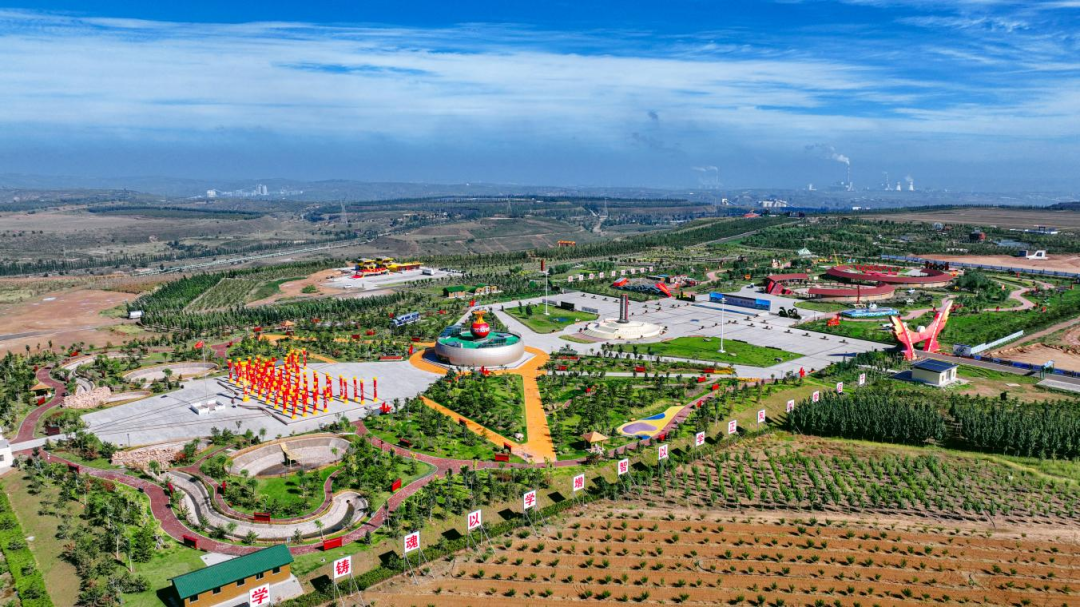
A “zero-waste” scenic area
Zhuneng Company has deeply explored the path of synergistic win-win outcomes between energy production and ecological conservation. Through a series of exemplary practical achievements, it has garnered numerous accolades, including “National Green Mine,” “China’s Most Beautiful Mine,” “Zunyi National Mine Park,” and “First Batch of ‘Green Waters and Mountains Are Mountains of Gold and Silver’ Practice and Innovation Bases in the Inner Mongolia Autonomous Region.” Its “Mining Area Ecological Restoration Case” was successfully included in the World Economic Forum report and the UNFCCC Conference of the Parties’ collection of outstanding green development cases among central enterprises, serving as a vivid example and powerful testament to the in-depth implementation of Xi Jinping’s Thought on Ecological Civilization.
Source: Ordos Municipal Bureau of Ecology and Environment.
https://mp.weixin.qq.com/s/LM1XIa5ToIF3wYsxSl-mFw