
Developing 100% sustainable aviation fuel from
It has been reported that the Engineering Center for Renewable Carbon Resources Science and Technology at East China Normal University recently announced a world-first achievement: using waste cooking oil (commonly known as “gutter oil”) as the sole raw material, the center has successfully produced 100% sustainable aviation fuel (SAF) that is directly compatible with aircraft engines. This fuel requires no blending with petroleum-based fuels, achieves carbon emissions reductions of over 50%, and outperforms conventional SAF in terms of emission reduction, providing critical technological support for the aviation industry’s green and low-carbon transition.
The newly developed 100% waste cooking oil-based SAF has been tested by the Civil Aviation Administration of China (CAAC) Testing Center and met all nearly 50 performance criteria, fully complying with national standards for aviation jet fuel.
Through innovative processes, the team has converted waste cooking oil into core components compatible with domestically produced aircraft engines and specifically designed for testing in Chinese aircraft. After blending in the appropriate proportions, the fuel is ready for immediate use, completely eliminating dependence on petroleum-based fuels.
This achievement builds on over 20 years of research by Professor Zhao Chen’s team at East China Normal University and was completed after nearly three years of continuous research and development, breaking through the international limitation that similar technologies require blending with fossil fuels.
Advantages of the Approach: No Competition for Food Grains, Costs Reduced by Over 30%
Currently, most global 100% SAF technologies use waste cooking oil and corn as feedstocks, sparking controversy over “competing with the public for food.” The Shanghai team uses only waste cooking oil as the sole feedstock, making their technical approach more environmentally friendly and sustainable.
The team has developed a hydrogen-free directed conversion process, revolutionizing the internationally dominant hydrogenation and deoxygenation technology. The production process requires no hydrogen consumption, reducing costs by over 30% compared to mainstream technologies, while achieving higher feedstock conversion rates—laying the groundwork for cost advantages in large-scale commercialization.
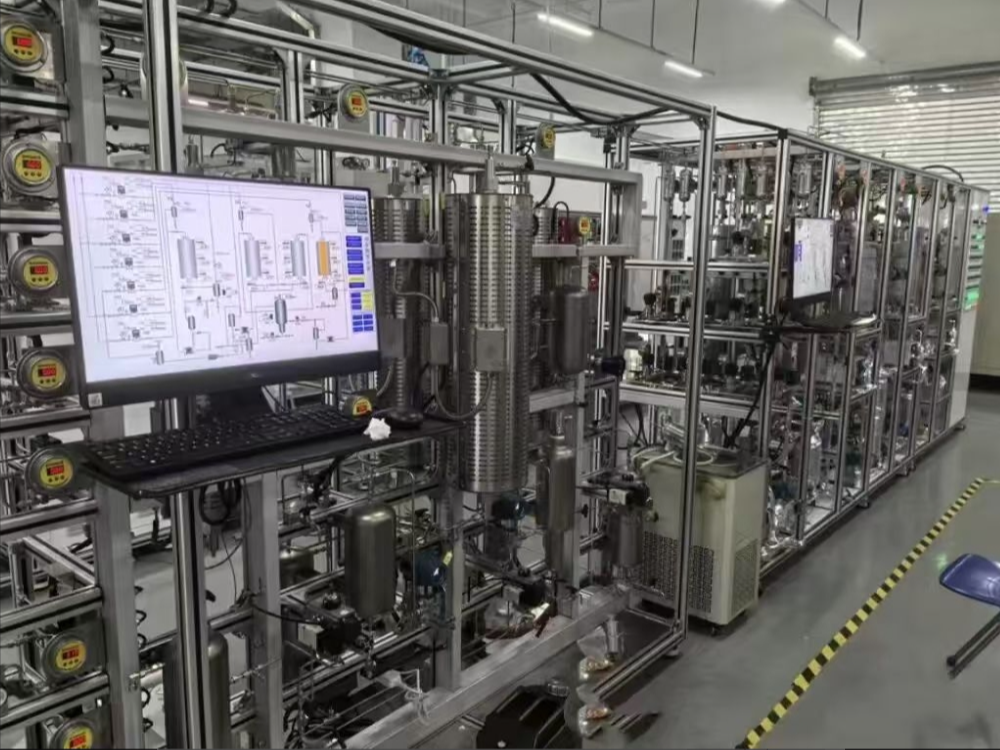
Industrial Implementation: Pilot Testing to Begin in September, Creating a Closed-Loop System from Dining Tables to Airports
With the support of the Shanghai Municipal Science and Technology Commission, East China Normal University has partnered with enterprises such as the Shanghai Airport Group to establish Shanghai Shangneng Green Aviation Energy Technology Co., Ltd., advancing the industrialization of the technology.
The project is managed end-to-end by a project manager from the Shanghai Municipal Science and Technology Commission. Environmental, energy, and safety assessments have been completed. The pilot plant is being constructed by Shanghai Boiler Works, a subsidiary of Shanghai Electric Group. Pilot operations are scheduled to begin in September 2026, with stable operation expected by year-end, meeting the technical target of an annual production capacity of 5,000 tons of oil-based SAF.
Following the completion of the pilot phase, a 100,000-ton industrial application demonstration will be launched. The product will be prioritized for trial use at Shanghai’s two major airports, Pudong and Hongqiao, gradually establishing a closed-loop, high-end green industrial chain encompassing “citizens’ dining tables — waste cooking oil collection — SAF production — airport refueling.”
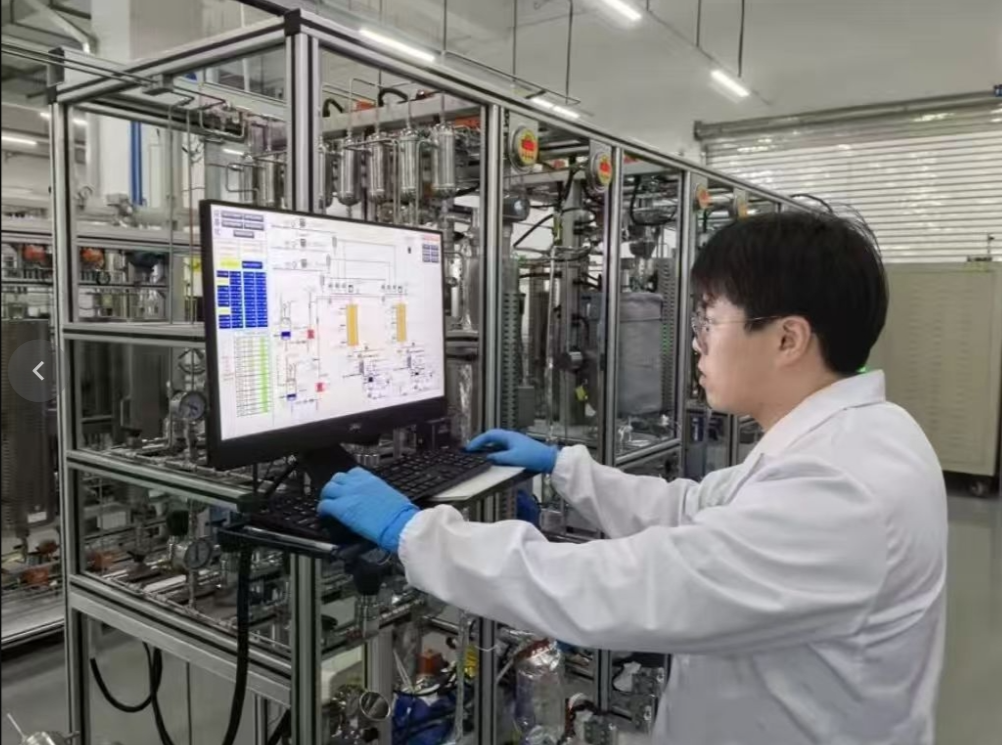
Researchers operating the experimental facility for producing 100% oil-based SAF
Breaking the Monopoly: Supporting the Green Transition of Domestic Large Aircraft
In 2023–2024, AECC and COMAC successively entered into partnerships with the team to jointly develop 100% oil-based SAF compatible with domestic engines and aircraft. The goal is to break the technological monopoly held by Europe and the United States and provide core fuel support for the low-carbon transformation of domestic aviation equipment.
In the future, Shanghai will leverage this project to establish itself as a hub for sustainable aviation fuel innovation and an industrial stronghold, contributing Shanghai’s strength to the national “Dual Carbon” strategy and the green development of the aviation industry.
Resource:https://mp.weixin.qq.com/s/esUTWPxioGJ5b6pNtGpMSA