Five Choices China's Solid Waste Companies Can't Avoid in the Next Five Years
As China enters the 15th Five-Year Plan period, the logic driving the solid waste industry has shifted markedly.
Incineration has moved into an existing-asset phase. General hazardous waste treatment capacity is trending toward oversupply. Municipal sanitation projects are increasingly judged on collections and cost control. Food and kitchen waste operations are running into problems on both ends — collection logistics and where their recovered products can actually go.
At the same time, new demand is emerging in recycled materials, industrial solid waste, new-energy waste streams and the clean-up of legacy waste sites.
Policy priorities are shifting as well. The State Council's Action Plan for Comprehensive Solid Waste Management sets 2030 targets of 4.5 billion tonnes of bulk solid waste put to comprehensive use each year and 510 million tonnes of key recycled resources circulated annually, and extends the governance system further upstream to source reduction, collection and transport, resource utilization and full-process oversight.
The 15th Five-Year Plan for Solid Waste Pollution Prevention and Control, issued in 2026, further clarifies policy direction for the next five years. Alongside it, the 15th Five-Year Plan for Building a Beautiful China calls for remediation of more than 60% of legacy solid waste storage sites and for hazardous waste sent to landfill to be held below 10% of total disposal volume.
Over the next five years, the question that really matters for solid waste companies may no longer be "what's the next hot track?" but five far more concrete ones.
These choices will determine what a company grows on — and what kind of company it becomes five years from now.
Keep chasing new capacity, or pivot to running what you already own?
The first choice plays out in waste incineration.
For more than a decade, the main way incineration companies grew was by adding projects. A new project meant more treatment capacity; a new plant meant another long-lived operating asset. Project count, design capacity and installed capacity therefore became the headline measures of scale.
That path has now visibly narrowed.
After years of concentrated construction, most regions of China have completed their baseline incineration capacity. In some places, designed capacity even exceeds the volume of waste actually generated. Slower population growth, changes in waste generation and duplicative regional facilities have further aggravated low load factors at some plants.
So the core question for incinerator operators is shifting from "how many more plants can we build?" to "how much more value can we extract from the plants we already have?"
Two identical plants can produce very different results from here on.
Whether the waste supply is sufficient, the calorific value of the waste entering the furnace, whether power generation per tonne can be raised, whether in-plant power consumption can be cut, whether heat supply can become a stable revenue line, whether fly ash disposal costs can be brought down, and whether equipment needs a major retrofit after ten-plus years of operation — these factors are increasingly and directly determining project returns.
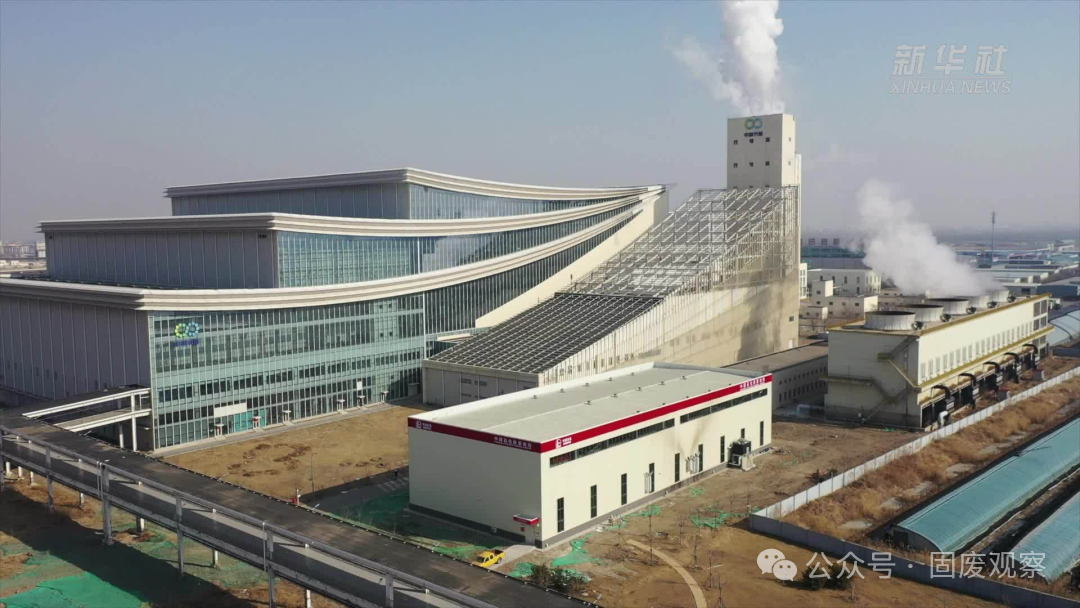
Tianjin waste-to-energy plant's waste-heat district heating project. As incineration moves into its existing-asset phase, heat supply, retrofits and energy efficiency are becoming key levers for lifting the returns of a single asset. Photo: Xinhua
The same shift is underway beyond incineration, in hazardous waste.
For years, one of the industry's most valuable assets was disposal capacity itself. When supply was short, holding a licence and a treatment line was valuable in its own right. After years of expansion, incineration, landfill and some resource-recovery capacity are now abundant in many regions, and the general treatment market has moved into fuller price competition. Adding more ordinary disposal capacity no longer reliably produces incremental returns.
Municipal sanitation is changing in a similar way.
Marketization expanded rapidly, large integrated sanitation contracts kept coming to market, and companies could grow revenue by winning bids continuously. As local fiscal pressure has risen, headline contract value matters less, while collection cycles, labour costs, mechanization efficiency and project gross margin have returned to the centre of the picture.
One important change therefore runs through the whole solid waste market of the next five years: growth is shifting from building assets to operating assets. And that change reshapes the capabilities an organization needs.
The construction era demanded financing, investment, engineering and market development. The existing-asset era demands cost management, equipment management, procurement systems, technical retrofit, data management and regional coordination. The two skill sets are not the same.
For companies that already hold a large portfolio of assets, continuing to chase a league-table position on treatment capacity will be worth less and less. Whether existing assets can generate steady cash flow may deserve far more management attention.
Keep earning treatment fees, or also capture resource value?
The second choice concerns the industry's most fundamental profit model.
For a long time, most environmental solid waste businesses were built on payment for treatment: municipalities pay a fee per tonne of household waste; hazardous waste is charged by the tonne for disposal; food waste projects depend on service fees; sanitation companies are paid under service contracts.
The great appeal of this model is that revenue is relatively predictable. But the profit structure of the industry has already begun to change.
At some resource-recovery companies, profit increasingly depends on selling recovered metals and recycled materials. Movements in copper, gold, silver, lead and zinc prices flow straight through to the bottom line of hazardous waste recyclers. The value of end-of-life vehicles, electrical and electronic products and power batteries is similarly determined by the ability to sell the materials recovered after dismantling.
Household waste incinerators are also looking for revenue beyond treatment fees.
Heat supply is a classic example. Where industrial steam demand exists, an incinerator can sell heat to external users, adding energy revenue while raising overall energy efficiency. The operating logic of some high-quality incineration assets has already shifted from power generation alone to a combination of power and heat.
The same applies to food and kitchen waste. If a project depends solely on government treatment fees, its profitability is tied to the payer's fiscal capacity. Projects that can reliably extract waste oil and feed it into a mature downstream chain show markedly better revenue structures.
National policy keeps pushing in this direction. The Action Plan for Comprehensive Solid Waste Management sets the 2030 target of 510 million tonnes of key recycled resources circulated annually and calls for better institutions to promote the use of recycled materials.
Resource recovery will therefore be a major source of growth over the next five years. But it should not be mistaken for simply a more advanced business model. Once a treatment company enters the recycling market, its operating logic changes substantially.
Where companies used to worry about capacity utilization, environmental compliance and unit treatment cost, they must now also manage raw material purchase prices, product prices, inventory cycles, commodity price swings and downstream customer demand.
Hazardous waste recyclers know this well. The same tonne of metal-bearing waste can produce very different profits depending on where you are in the metals price cycle — and if feedstock prices rise too fast, they can erase the gains from higher product prices.
So over the next five years, solid waste companies need to answer honestly whether their core capability fits environmental services or resource processing. The two businesses can be combined, but the operating capabilities they require are very different.
Companies that want to succeed in resource recovery over the long term will need to build procurement, production, sales and risk-management systems that look much more like a manufacturer's. Environmental treatment technology alone rarely produces a durable competitive advantage.
Stay broad-based, or go specialized?
Over the past decade, one trend dominated the solid waste industry: the value chain kept getting longer.
Incineration companies moved into sanitation; sanitation companies moved into waste sorting; local solid waste platforms absorbed food waste, construction waste and recycling; and some large environmental groups set out to cover virtually every category of urban solid waste.
There is logic to this. For local state-owned platforms in particular, managing a city's sanitation, transfer, incineration, food waste and construction waste facilities under one roof reduces coordination costs between separate entities and helps build a unified municipal solid waste system. Much of the platform consolidation now underway in Chinese cities is driven by exactly this need.
As policy raises its requirements for full-process solid waste management, this regional integrated model still has room to grow. The Action Plan for Comprehensive Solid Waste Management explicitly calls for a system covering source reduction, process control, end-of-pipe utilization and harmless management across the whole chain.
But conglomeration does not suit every company — and this is especially worth noting for privately owned solid waste firms.
Incineration, hazardous waste, sanitation, food waste, construction waste and recycling differ enormously in customer structure, technical requirements, profit model and operating system.
Entering more fields does not automatically create synergy. This is precisely where many companies ran into trouble in recent years. As their scope widened, revenue grew — but headquarters complexity grew faster. Some business lines carried thin margins, some projects tied up large amounts of cash, and the businesses with genuine technological barriers ended up under-invested.
So solid waste companies need to rethink their boundaries.
Large central state-owned enterprises and local platforms may continue moving toward integrated operations, because they have capital strength, public-service mandates and an advantage in pooling regional resources.
For a large number of specialized private companies, the better path is the opposite one: narrow the business boundary and deepen expertise.
Special hazardous waste streams, fly ash resource recovery, landfill remediation, industrial solid waste recovery, recycled materials production, smart equipment, pollution monitoring and digital compliance all have the potential to become viable specialist markets.
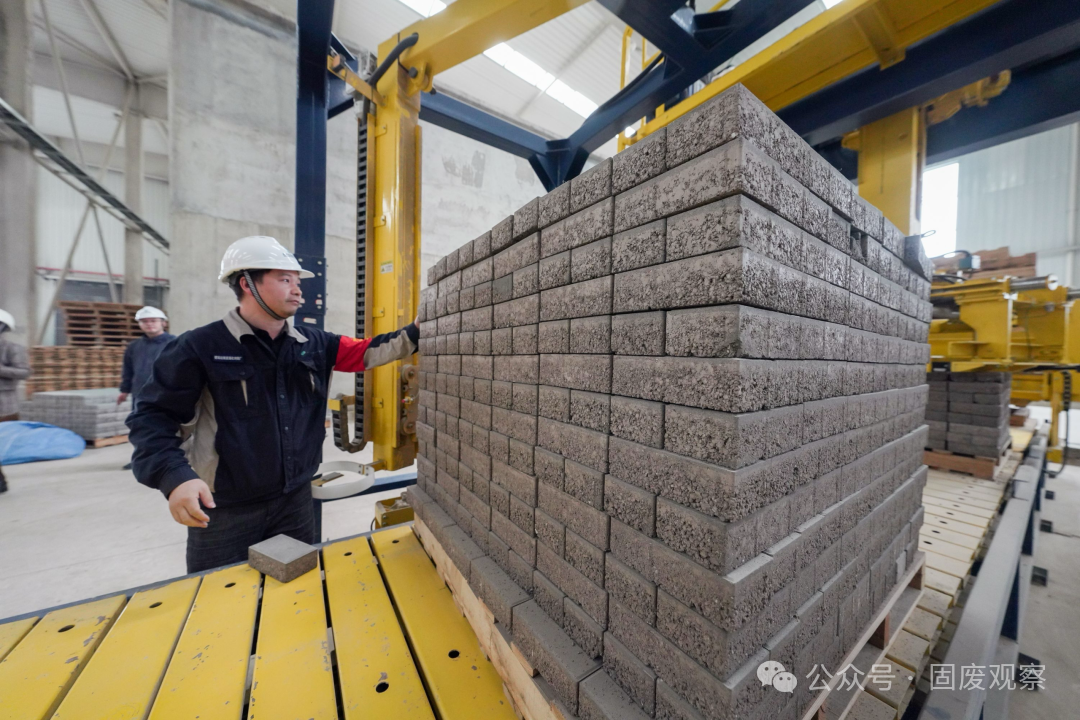
The competitiveness of specialized solid waste companies increasingly rests on specific scenarios and products. Pictured: construction waste turned into permeable recycled bricks at the Qianzishan Circular Economy Industrial Park in Wuhan. Photo: Wuhan Municipal People's Government
These markets are not necessarily large, but customer needs are more specific and depend more heavily on long-term technical accumulation.
The industry is likely to stratify more clearly. Large platforms will own assets and system integration; specialist companies will own technology, equipment and niche operating capability.
For mid-sized solid waste companies, the real question is which segment of the value chain offers the best chance of building a lasting competitive advantage.
Keep expanding heavy assets, or start exporting capability?
The industry's past growth relied heavily on an asset-heavy model.
In waste incineration, hazardous waste treatment and food waste processing in particular, a single project often means hundreds of millions — sometimes billions — of yuan in investment. Companies raised financing, built the project, and recovered the investment through long-term operating contracts.
This model helped China build a large solid waste infrastructure system quickly, and it created a group of environmental companies with very large asset bases. Today it is running into new constraints.
First, good new projects are scarcer. Traditional household waste incineration can no longer sustain its previous pace of project release, and hazardous waste and food waste markets are finding it harder to earn stable returns simply by adding treatment capacity.
Second, there is the cost of capital and cash-flow pressure. As collection periods lengthen on a large number of government-paid environmental projects, the gap between booked revenue and actual cash flow matters much more.
Third, there is asset yield. A project with a very large investment that runs at low load for years may still book revenue while delivering a very poor return on capital employed.
So over the next five years, companies need to recalibrate the weight of "assets" versus "capability."
Capability export takes several forms.
A company can export operating and management capability, or provide technical services, core equipment, process packages, consumables, digital systems and specialized O&M.
For incineration equipment makers, as domestic new-build slows, retrofits of installed equipment, replacement of core components and long-term O&M services are becoming more important.
For companies with mature operating systems, contract operation of third-party assets is a way to grow with less capital deployed.
For companies with a niche technological edge, productizing that technology reduces the amount of new capital required for every increment of revenue.
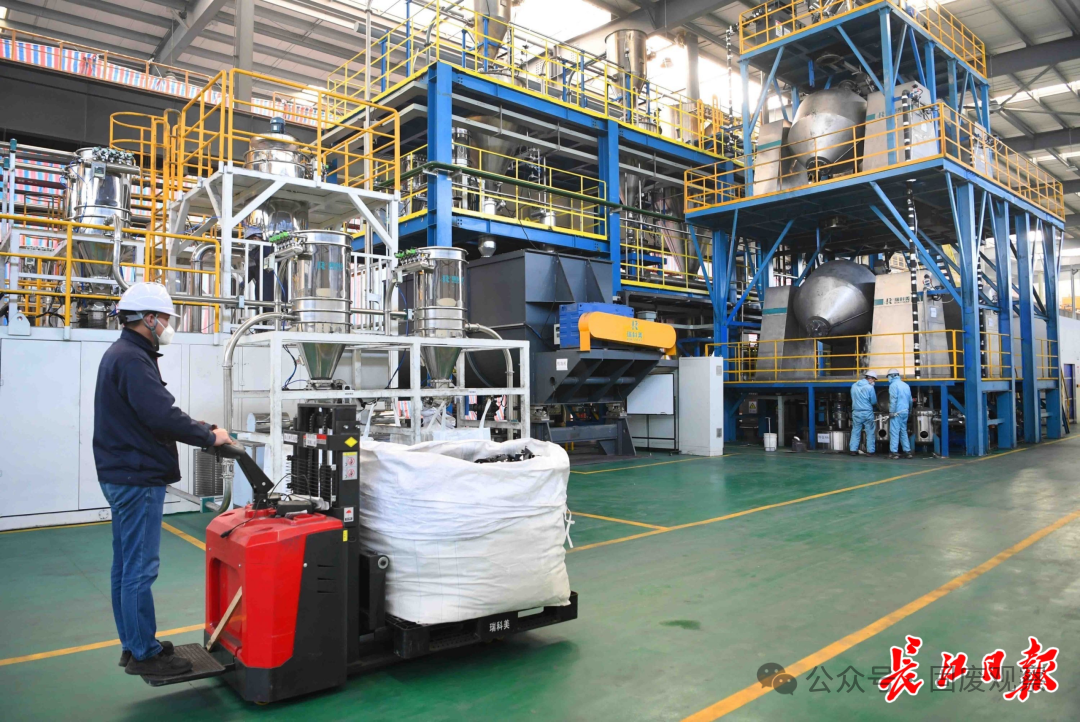
Growth can increasingly be built on process, equipment and technical capability. Pictured: a green recycling line for used lithium batteries at Wuhan RuiKemei. Photo: Wuhan Municipal People's Government
None of this means the asset-heavy model has lost its value.
Urban infrastructure still needs long-term asset owners. Solid waste assets with stable cash flow, clear regional demand and high barriers to entry will still hold good long-term value.
What needs to change is the standard applied to asset-heavy expansion.
Projects used to be judged first on scale and market share. Going forward they need to be judged on load factor, the creditworthiness of the payer, contract structure, cash flow and full-life-cycle return.
For many private companies this choice is especially pressing.
Their cost of capital and financing capacity make it hard to compete head-on with large central SOEs and local state platforms. If they keep relying on heavy capital deployment for growth, their ceiling will become increasingly obvious.
Investing more in technology, products, operations and customer capability is likely to produce a more sustainable path.
Keep competing for projects, or compete for waste flows?
The last choice concerns how competition itself will work.
For a long time, the resource companies fought over was the project. Win a waste incineration concession and you secured a long-term waste supply. Win a sanitation contract and you secured a defined service area. Holding a hazardous waste operating licence also meant a strong barrier to entry while regional capacity was short.
So the most important job of the business development team was, for years, simply winning projects.
As resource recovery deepens, that is changing. What is genuinely scarce is increasingly the stable, compliant and economically valuable waste itself.
Hazardous waste recyclers need a continuous supply of industrial waste with economic value. Recycling companies need a stable collection system for used materials. Power battery recyclers need control over the sources of retired batteries.
A construction waste recycling project without a steady feed will struggle to operate well no matter how much capacity it has built. Food waste projects face the same issue on collection: without a reliable collection system, design capacity never converts into actual throughput.
Competition is therefore moving upstream. What a company really competes over increasingly comes down to three questions: where does the waste come from, can it keep coming, and who buys the product after treatment.
This is clearest in industrial solid waste. Many industrial solid waste recovery projects are technically feasible but still hard to commercialize — and the obstacles are usually feedstock stability, transport radius and sales of the recovered product.
Which means owning a treatment plant is no longer a complete competitive moat.
The companies that create the most value going forward will progressively control the critical links: the point where waste is generated, the collection and transport system, sorting and processing, and downstream sales channels.
Policy is reinforcing the trend.
Since 2026, solid waste policy has clearly tightened full-process management. The 15th Five-Year Plan for Building a Beautiful China calls for stronger chain-wide control of industrial solid waste, promotes the "five immediates" standard at hazardous waste generating facilities, and strengthens one-code, end-to-end oversight.
As digital oversight matures, the flow of waste becomes more transparent, and business models built on information asymmetry or grey channels will continue to be squeezed out.
For compliant companies this cuts both ways: it raises compliance costs, but it also opens opportunities to gain market share.
Market capability in this industry will therefore need to extend from project development into supply chain organization.
Whoever can secure stable waste sources and convert them into stable products and cash flow is most likely to hold the initiative in the value chain.
What it comes down to: what do you grow on?
There will still be growth in the solid waste industry over the next five years.
It just becomes harder to describe that growth as a single "hot track."
Some companies will grow out of the efficiency of assets they already own; others out of resource-recovery supply chains. Some will continue as regional integrated operators; others will take one niche product, one technology or one type of service and go deep enough to own it.
What separates companies is unlikely to be who called a hot direction first.
It is who defined their own growth mechanism earliest — and then reallocated capital, customers, organization and capability around it.
Rather than simply ranking tomorrow's tracks, we have put incineration, hazardous waste, sanitation, food and kitchen waste, construction waste, industrial solid waste, recycling, local platform consolidation, equipment-maker transformation and overseas expansion back into one common operating frame:
Is the demand real? Who is willing to keep paying? How does cash flow form? What capabilities does the company need to build? When is it worth continuing to invest — and when should expansion stop?
As the industry moves from uniform expansion into differentiated competition, opportunity itself does not disappear.
But the distance between seeing an opportunity and actually turning it into corporate growth is getting wider.
Five years from now, the biggest difference between solid waste companies will probably not be who covered more tracks or owned more treatment capacity. It will be who found a way of growing that matches their own capabilities and produces cash flow, year after year.