
Interface-Rich Catalyst Turns Discarded PET Bottles into a Reusable Chemical Building Block
A porous manganese oxide–alumina nanocatalyst converts PET waste into a high-value monomer and retains most of its performance over repeated use.
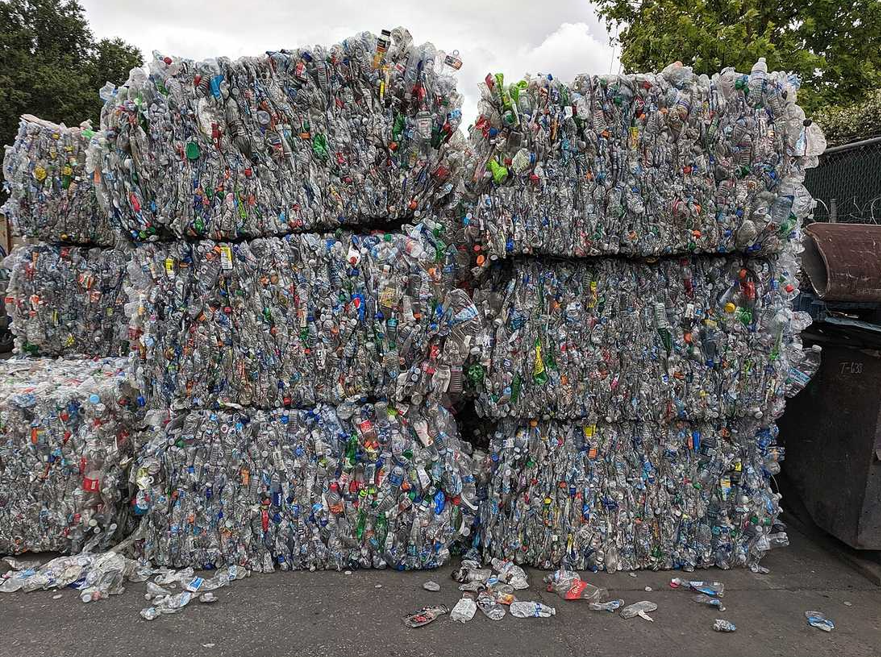
Researchers at the Indian Institute of Technology Hyderabad have developed a heterogeneous nanocatalyst that converts discarded polyethylene terephthalate, or PET, into a reusable chemical building block. The study, published online in ACS Applied Materials & Interfaces on October 20, offers a materials-design strategy for recovering greater value from waste bottles instead of treating them only as low-grade recycled feedstock.
The catalyst combines manganese oxide nanoparticles with porous alpha-alumina nanosheets. By controlling the morphology of both components, the researchers created extensive contact regions between the two oxide phases. These interfaces strengthen the catalyst’s Lewis-acid character and provide manganese redox sites that help drive the reaction between PET and neopentyl glycol.
Under the reported conditions, the catalyst produced a 90% isolated yield of bis(hydroxy neopentyl) terephthalate, or BHNT. This compound is a functional monomer that can be used in subsequent polymer production, allowing the carbon contained in discarded PET bottles to return to manufacturing instead of being lost through disposal or uncontrolled degradation.
Electron microscopy revealed highly dispersed MnOₓ nanoparticles on the porous alumina nanosheets. The researchers attributed the catalytic performance to the close contact between the two materials, which created a combination of acid–base and redox-active sites.
The solid catalyst could also be recovered and reused. After four reaction cycles, the BHNT yield had decreased by eight percentage points. Analyses of the used catalyst indicated that its crystal structure, morphology, porosity and interfacial features were largely preserved.
To demonstrate the usefulness of the recovered product, the researchers employed BHNT in polyurethane synthesis. This result extends the significance of the process beyond PET decomposition: it shows that waste plastic can provide a functional raw material for manufacturing another class of polymer.
The work remains a laboratory-scale demonstration. Further research will need to evaluate contaminated and mixed PET feedstocks, longer catalyst lifetimes, solvent recovery, energy consumption and product-purification costs. Nevertheless, the findings show how deliberate interface engineering can integrate several catalytic functions into one recoverable solid and create a more selective route for plastic-waste upcycling.
Research source: Katravulapalli Pallavi, Mudavath Arun Kumar and Putla Sudarsanam, “Porous, Interface-Rich MnOₓ/α-Al₂O₃ Nanocatalyst for Chemical Upcycling of PET Plastic Waste,” ACS Applied Materials & Interfaces (2026). DOI: 10.1021/acsami.6c15046; PubMed record.