Overseas Expansion of China's Waste-to-Energy: What Can China's Experience Offer the World?
China's waste incineration industry is accelerating its expansion into Southeast Asia. From Indonesia to Vietnam, from Thailand to Malaysia, Chinese companies have taken on waste treatment projects in city after city, with operating periods ranging from 20 to 50 years. Behind this lies a common predicament facing Southeast Asian countries — the "siege of waste": growing waste generation, insufficient collection and transport coverage, landfills nearing capacity, and an urgent need for viable treatment solutions.
In the industry narrative, this is framed as "technology export" and "capacity going global" — domestic waste is no longer enough to burn, Southeast Asia still has room, and companies naturally take their incinerators and flue gas treatment equipment abroad. Behind this is the hard power accumulated by China's waste incineration industry over two decades. From technology introduction and digestion to independent innovation, Chinese companies have achieved international competitiveness in grate furnace technology, flue gas purification systems, and automation control, bringing a solution that has been repeatedly verified in operation.
But China's waste-to-energy exports are not just about equipment and technology — they represent a choice about "how waste should be managed." This path worked under China's specific conditions, but it came at a cost. That is why China, as a responsible major country, should present the full picture of its experience — including both achievements and limitations — frankly to host countries, enabling them to make informed decisions.
Why Did China Choose Incineration? A Choice Under Specific Historical Conditions
Looking back, China used incineration to solve the problem of waste harmless treatment. Harmless treatment means using high-temperature incineration to inactivate pathogens, decompose organic pollutants, and significantly reduce volume, thereby reducing immediate harm to soil, water, and air. From 2016 to 2024, the national incineration capacity surged from 238,000 tons/day to 1.11 million tons/day, with over 1,000 waste-to-energy plants rising on the outskirts of cities. This path was closely tied to China's specific land constraints, fiscal system, and administrative capacity — dense population, tight land supply, and rapid waste growth made incineration the fastest solution under the circumstances.
This path worked, but it came at a cost. Overcapacity is the most direct lesson — incineration capacity can handle 360 million tons of waste annually, but actual collection is only 320 million tons, forcing some companies to "scramble for waste." NIMBY conflicts were another cost, with mass incidents erupting between 2007 and 2014 in Guangzhou Panyu, Beijing Liulitun, and Hangzhou Jiufeng. Fly ash disposal and carbon lock-in remain long-term challenges. Fly ash treatment is still a difficult problem — each ton of waste incinerated produces 30 to 50 kg of fly ash. Carbon emissions are equally significant: once an incineration facility is built, it will continue to emit throughout its decades-long concession period, creating a high-carbon infrastructure lock-in.
These lessons point to the same fact: incineration is not a one-and-done technical solution, but a governance commitment requiring sustained investment in regulatory capacity, fiscal resources, and community trust.
It is worth noting that waste-to-energy plants have made significant progress in operational transparency — major plants across the country now have comprehensive data disclosure, with continuous emission monitoring data uploaded in real time to environmental authorities and made public, and compliance rates for major pollutants continuing to improve. This "online monitoring plus data disclosure" regulatory model, built up over the past two decades, offers direct reference value for Southeast Asian countries.
But this raises a noteworthy question: when Chinese waste-to-energy companies take their mature construction and operation capabilities overseas, what impact will this have on host countries' waste management? Will it help them quickly build harmless treatment capacity, or could it crowd out their source reduction and recycling systems? There is no simple answer.
Southeast Asia May Not Need — and May Not Only Look to — China's Model
Previously, the institutional environment for global waste governance has undergone significant changes. Southeast Asian countries now have more reference systems and stricter constraints than China had at a similar stage when designing their waste management systems.
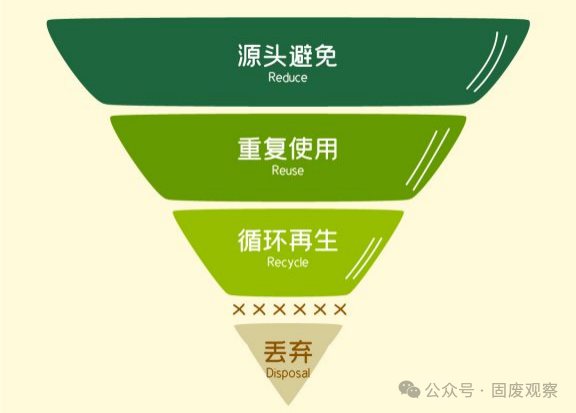
From the perspective of international institutional constraints, carbon emission limits have been tightening since the Paris Agreement. International initiatives on waste management generally emphasize the "inverted triangle" principle — source reduction, reuse, and recycling take priority over incineration. Since 2017, the European Union has excluded waste incineration from sustainable solutions, and its Industrial Emissions Directive sets much stricter emission limits for incineration facilities than current Southeast Asian standards. The Asian Development Bank's 2021 Energy Policy explicitly requires that incineration feedstock come from "a rational waste management hierarchy," and its 2023 supporting policy further clarifies that financing covers only the renewable energy portion. This means that projects relying on international public funding will face more stringent screening.
From Southeast Asia's own conditions, the region has options that China did not have at the time. OECD data shows that the informal recycling sector in ASEAN countries undertakes a significant amount of recycling work and serves as the backbone of plastic waste collection and sorting. Indonesia's Banyumas Regency demonstrates another possibility: through a community-led sorting system, residents use a digital application to separate organic and inorganic waste. Organic waste is converted into compost and biomass fuel, non-recyclable plastics are turned into RDF for cement plants, and about 80% of waste is managed locally. Vietnam also revised its Law on Environmental Protection in 2020, establishing waste sorting as a legal obligation for the first time, and plans to implement mandatory sorting in major cities starting in 2025.
However, not all Southeast Asian cities have such organizational capacity. The overall regional waste sorting rate remains limited; collection coverage in rural areas is below 40%, and the scaling of composting and anaerobic digestion is constrained by the lack of front-end separation. This means that for Southeast Asian countries, incineration can serve as a ballast stone — present but moderate — rather than the only option. Whether incineration is needed and at what scale should be determined based on each country's land resources, fiscal capacity, collection system coverage, and existing treatment facility conditions.
If adopting or designing an incineration scale, what experience can China offer?
China's two decades of waste incineration operation have accumulated some experiences that Southeast Asian countries can draw upon, the most direct being the construction of monitoring and regulatory systems.
Since 2020, all major waste incineration plants in China have achieved comprehensive data disclosure. Online flue gas emission monitoring data is uploaded in real time to the ecological and environmental departments and made public. The compliance rate for automatic monitoring data of five pollutants and furnace temperature has remained above 99% [14]. This regulatory model of "online monitoring" supplemented by "data disclosure" is a governance experience that China has gradually established over the past twenty years. For Southeast Asian countries, the value of this model lies in proving that waste incineration plants can operate under transparent supervision — provided the host country has the corresponding monitoring capability and enforcement willingness.
Second is the experience of coordinating the entire waste management chain. China's experience shows that once an incineration plant is built, it exerts a long-term shaping effect on the front-end management system. What an incineration plant needs is "sufficient and compositionally stable" mixed waste. When a plant requires thousands of tons of waste daily to keep running, the actual operational rhythm, route design, and transport capacity of the collection system tend to tilt toward "guaranteeing feedstock supply." Under this structure, recyclables and kitchen waste are more likely to be sent into the furnace together.
After China implemented waste sorting, the amount of waste suitable for incineration decreased, and the load rate of some incineration plants subsequently declined. The long-standing phenomenon of "residents sort properly, but collection trucks mix everything" meant that front-end investment failed to fully translate into back-end efficiency gains. This indicates that once an incineration facility is built, it generates a structural demand for "sufficient mixed waste," and this demand inherently conflicts with classification and reduction targets. When introducing incineration solutions, the host country needs to consider two questions simultaneously: where will the waste for this plant come from, and is there still room for the development of separate collection and recycling systems? The conflict between these two goals cannot be resolved through technological optimization alone; it requires making trade-offs at the planning stage.
But it must also be acknowledged that China's experience has limitations. Overcapacity, the tension between waste sorting and incineration, fly ash disposal challenges, and carbon lock-in — these are problems that China is still facing and still seeking answers to. Once an incineration facility is built, it will continuously emit emissions throughout a 30-year concession period, creating infrastructure lock-in to a high-carbon pathway. Even if the host country later wishes to shift to lower-carbon treatment methods, it will face enormous sunk costs already invested. Against the backdrop of carbon neutrality becoming an increasingly global consensus, today's incineration contracts may become tomorrow's carbon burdens that are hard to shed.
Conclusion
The significance of China's waste incineration going overseas does not lie in whether the incineration technology itself is good or bad, but in its potential to reshape Southeast Asia's waste management pathways. As a responsible major country, while exporting technology and equipment, China should also fully consider the long-term impact, presenting the complete picture of its experience — including both achievements and limitations — frankly before the host country, enabling it to make judgments with more complete information. The success of going overseas should not be measured by the number of signed contracts or installed capacity, but by whether it brings sustainable positive impacts to the host country.